
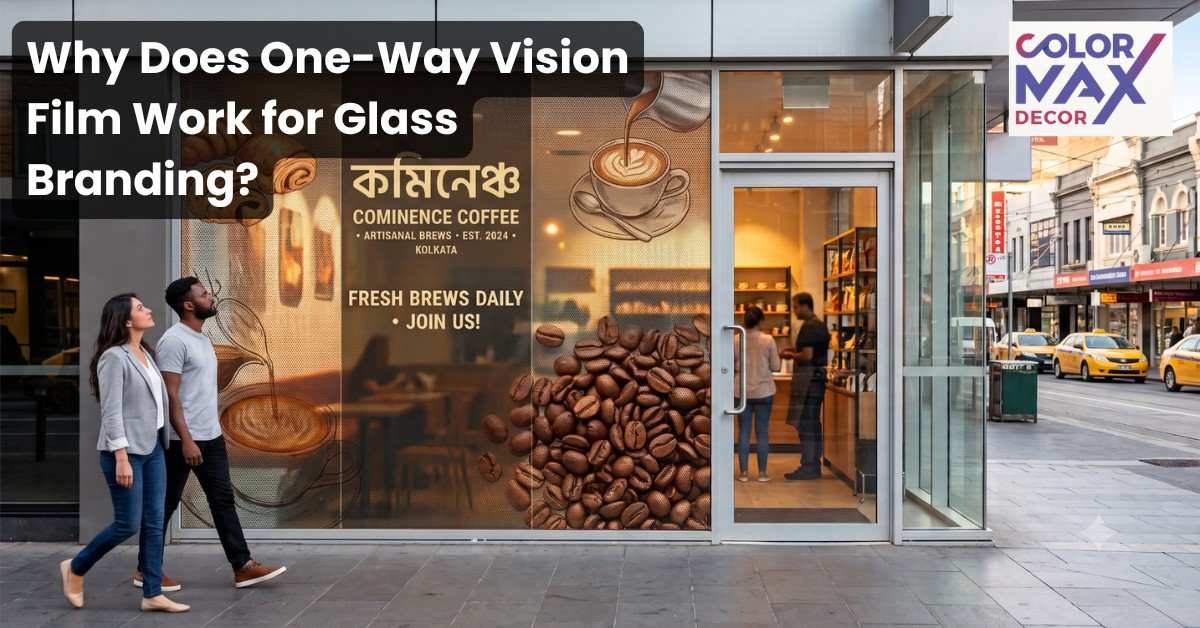
Glass surfaces are widely used in offices, retail stores, showrooms, clinics, restaurants, and commercial buildings. They create an open and modern appearance while allowing natural light to enter the space. However, large glass areas can also become valuable branding opportunities.
One-way vision film allows businesses to transform suitable glass surfaces into attractive graphic displays while maintaining visibility through the glass from the opposite side under appropriate lighting conditions. This makes it a practical option for businesses that want to combine branding with the existing functionality of their windows.
What Is One-Way Vision Film?
One-way vision film is a perforated graphic material designed to display printed visuals on one side while allowing people on the other side to see through the glass. The small perforations create this visual effect while providing space for branding, promotional graphics, or communication.
The viewing experience can vary depending on lighting, viewing distance, angle, film quality, and installation conditions. Therefore, these factors should be considered before selecting the material for a particular location.
Where Can It Be Used?
One-way vision graphics can be used across a variety of commercial environments. Retail stores can apply them to windows for promotional campaigns, seasonal offers, and brand messaging.
Offices can use glass graphics for corporate branding or selected privacy applications, while showrooms can display product visuals, campaign messages, and other promotional content. The material can also be suitable for certain glass partitions and transparent surfaces where conventional wall branding may not be practical.
The design should always reflect the purpose of the space and the audience viewing it.
Branding Without Losing the Glass Surface
One of the main benefits of one-way vision film is that it makes use of existing glass surfaces instead of requiring additional rigid structures. A plain window can become a prominent branding area without completely removing the visual connection between the interior and exterior.
For the best result, designs should remain simple and visually strong. Large graphics, clear brand elements, short messages, and bold imagery are generally more effective than designs filled with lengthy text, particularly when people are viewing the graphics while walking or travelling past the location.
Design and Printing Quality Matter
The quality of the finished graphic depends heavily on artwork preparation and printing. Low-resolution images, inaccurate colours, or poorly prepared artwork can reduce the professional appearance of the installation.
Artwork should be created according to the exact dimensions of the glass surface. Designers should also consider the perforated structure of the material when positioning important logos, text, and other visual elements.
A well-prepared design ensures that the branding remains clear and visually balanced after printing and installation.
Installation Is Equally Important
High-quality film and printing cannot compensate for poor installation. Before application, the glass needs to be properly cleaned and prepared to create a suitable surface.
Dust, air bubbles, wrinkles, uneven application, or incorrect alignment can affect both the appearance and performance of the graphic. Professional installation helps achieve a cleaner finish and can also contribute to the durability of the application.
Lighting Can Change the Visual Effect
Lighting plays an important role in how one-way vision film performs. The difference in brightness between the interior and exterior can influence whether the printed graphic or the view through the glass appears more prominent.
For this reason, businesses should evaluate the installation location at different times of the day. A graphic that looks strong in daylight may produce a different visual effect after interior lights are switched on at night.
Understanding the lighting conditions before installation can help businesses choose an appropriate design and application.
Conclusion
One-way vision film offers businesses an effective way to turn glass surfaces into useful branding and communication areas without completely sacrificing their functional purpose.
Its success depends on several factors, including material quality, artwork preparation, printing, lighting, glass preparation, and professional installation. When these elements are considered together, glass graphics can strengthen a business’s visual identity while making better use of otherwise unused window space.